News
Behind the Curtain: A Q&A with Broadway Hair Supervisor Andrea DiVincenzo Shairs
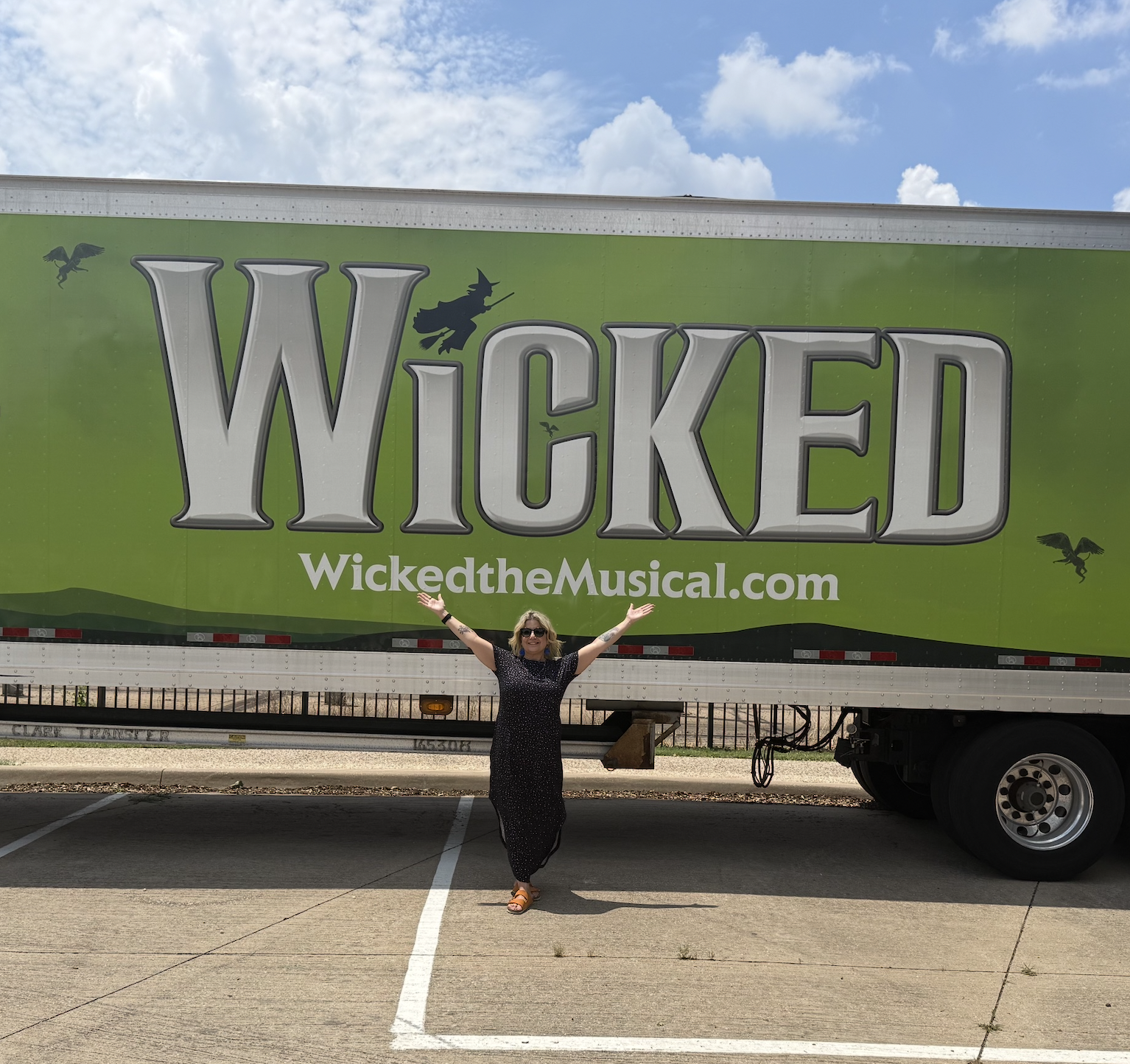
From Broadway stage doors to the national tour of Wicked, Andrea DiVincenzo Shairs (Delta Pi, Eastern New Mexico University) has built a career rooted in creativity, adaptability, and connection. Andrea has spent years helping bring one of Broadway’s most iconic productions to life while also building lifelong friendships through sisterhood along the way.
What first sparked your interest in hair styling, and how did that passion eventually lead you to Broadway?
I got bitten by the theatre bug when I was 8 years old and haven’t looked back since. I was in a third-grade play, and on the way home, I turned to my mom and said, “That’s what I want to do with the rest of my life.”
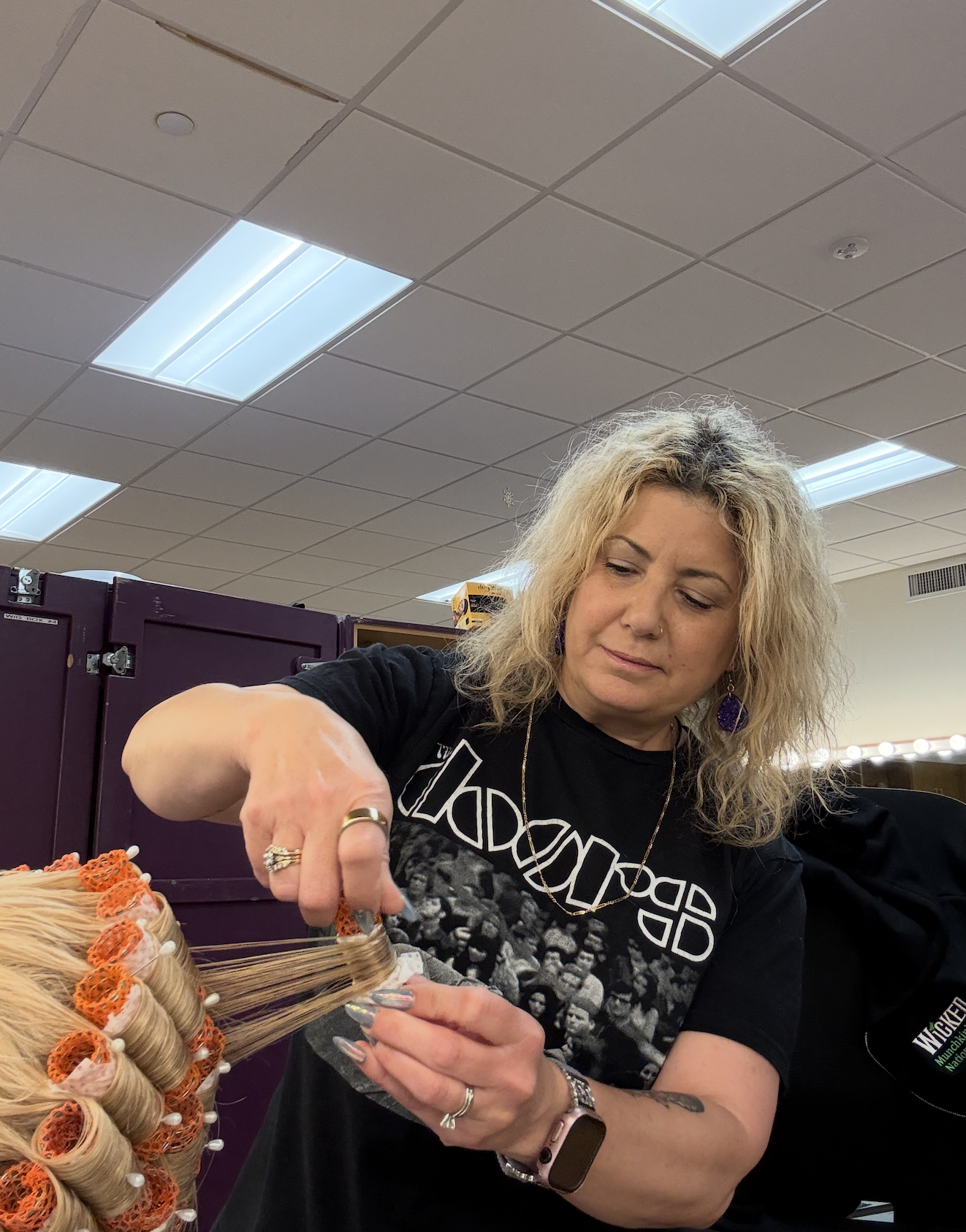
As I got older, I started thinking about other ways I could work in the industry because I knew theater was where I wanted to be. I’ve always been drawn to creativity and storytelling, and hair styling became a way for me to combine both passions. I loved doing hair and loved theater, so it felt like the perfect combination.
After graduating from college in 1995, I moved to New York City in 1997. I worked all kinds of jobs—salons, temp agencies, catering companies, bartending, even a PR firm—before eventually getting into stage management. Through that work, I made industry connections, and one colleague offered me a position working on the hair for Homebody/Kabul at the New York Theatre Workshop. That’s where I met Tom Watson, the hair and wig designer for Wicked. I later started working in his studio and learned an incredible amount from him.
What was your first Broadway job, and how did you land it?
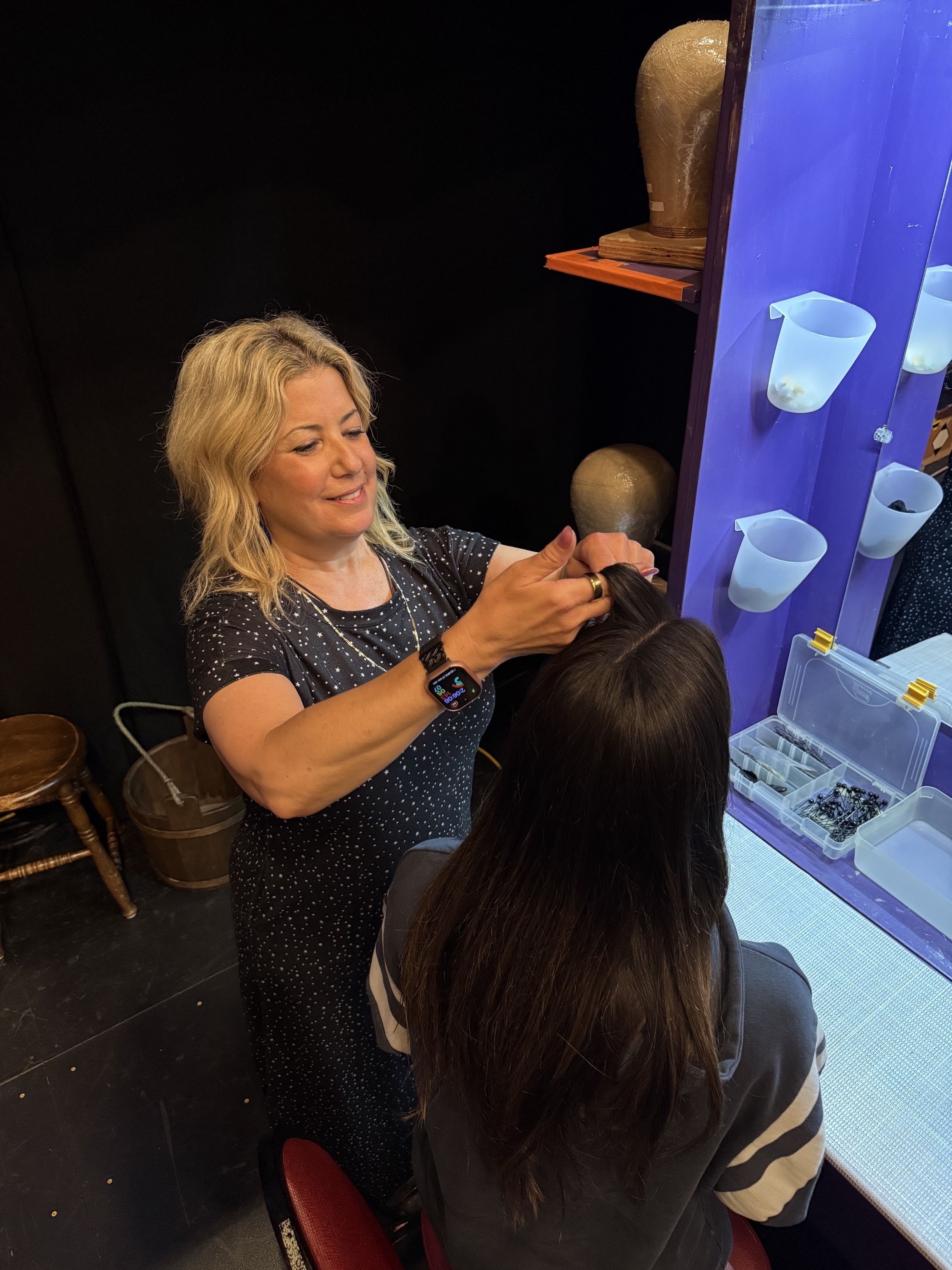
While working in Tom Watson’s studio, he encouraged me to start dropping off my résumé at stage doors. Eventually, the calls started coming in for swing positions. I was nervous and excited all at once because it finally felt like things were happening.
The first productions I worked on were Beauty and the Beast and Les Misérables. My first independent track was on Les Misérables, and it was such an incredible experience. I even had a few onstage wig changes and had to get into costume while handling set piece presets. It was nerve-racking, but I absolutely loved every second of it.
What inspired you to join the national tour of Wicked?
I started as a swing on Wicked during previews in 2003 and worked there quite a bit. I always knew I wanted to tour, so when the first national tour was being staffed in 2005, I told Tom Watson I was interested.
He hired me as the assistant, which was the perfect role because I had never toured before. I learned so much from that experience. The opportunity to work on a show with such detailed and recognizable hair and wig design was something I couldn’t pass up.
I also really loved the idea of traveling. I wanted to see if I could handle being away, and I genuinely enjoy being in different places and experiencing different cities.
What does a typical day look like for you while on tour?
We work six days a week and perform eight shows. Mondays are our only day off. During the day, unless we have a rehearsal or work call, we usually have some free time.
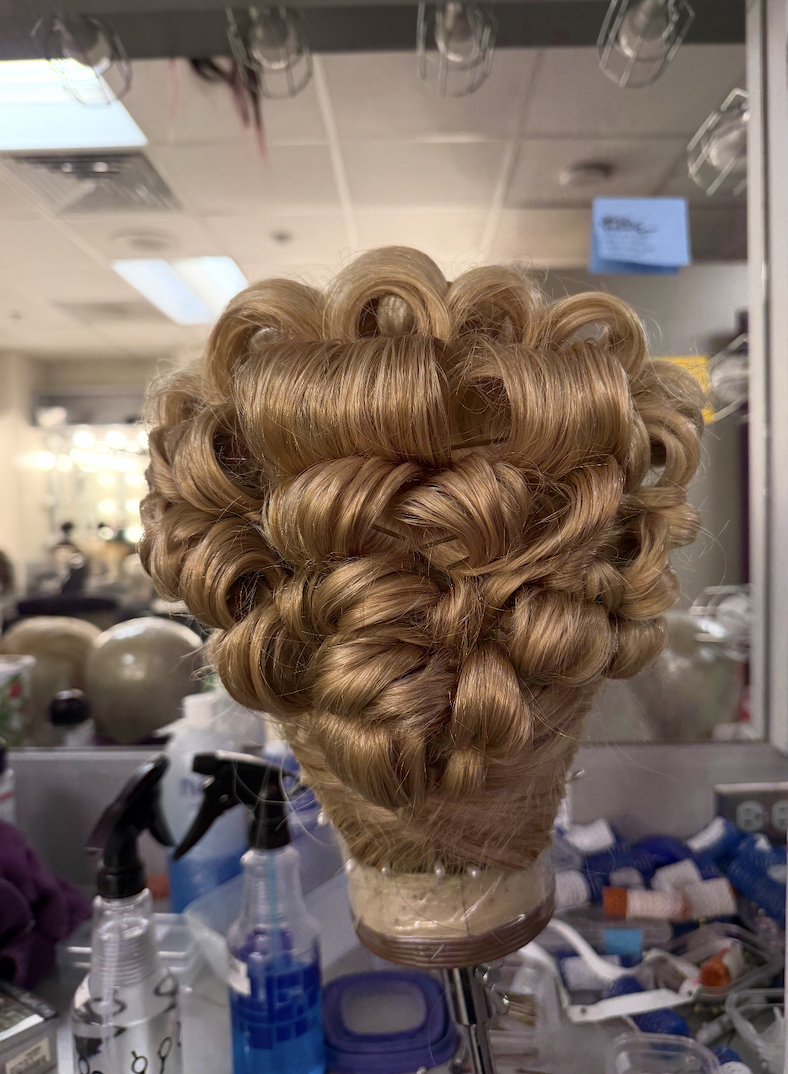
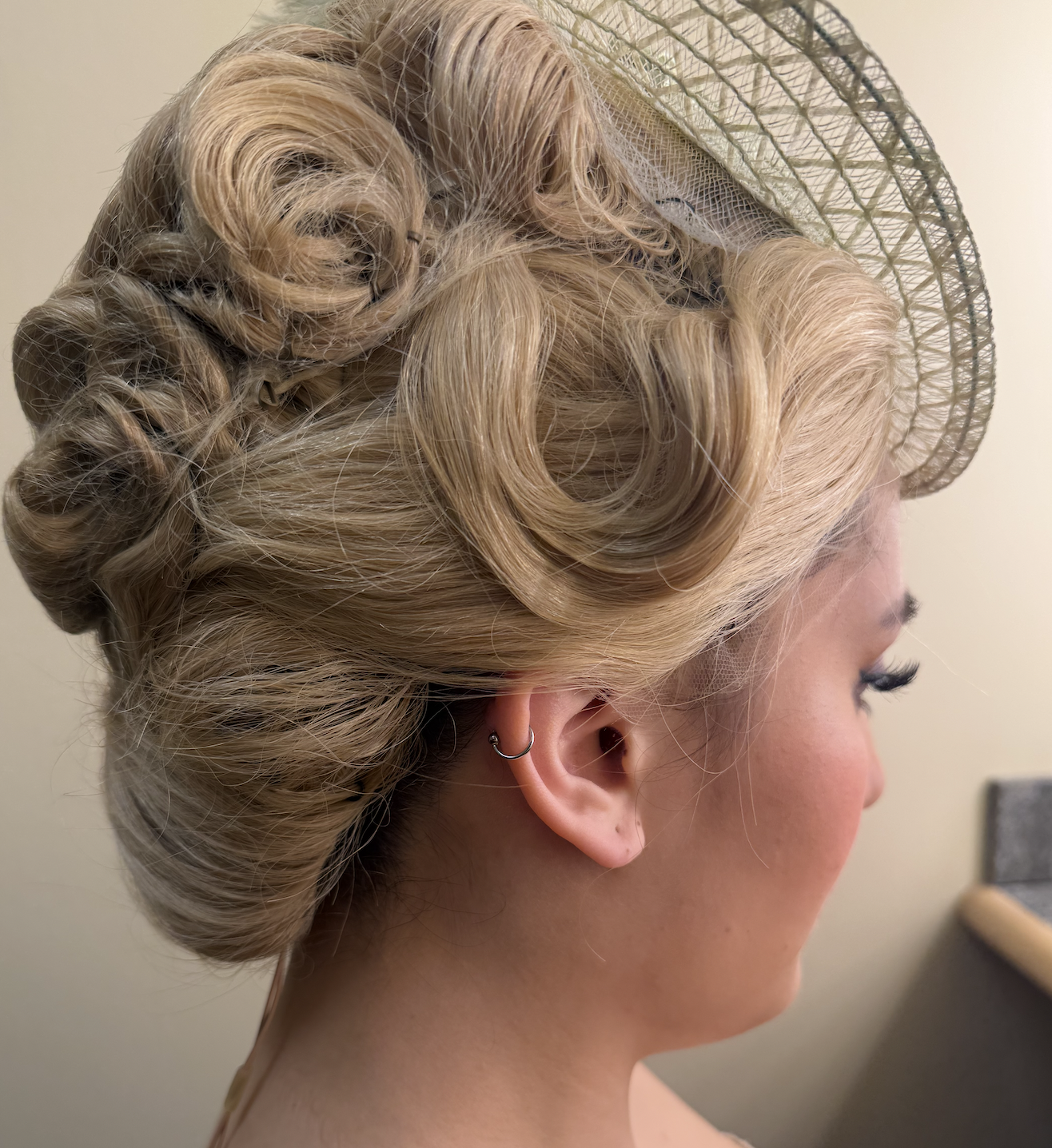
During work calls, we wash, set, and style wigs. Most of the wigs are made from human hair, so they require the same care and maintenance as natural hair. During performances, timing and communication are critical because many wig changes happen in just seconds backstage.
Each crew member follows what we call a “track,” which is their assigned responsibilities during the show. Backstage is just as choreographed as what’s happening on stage.
Touring itself is also an adjustment. Some people fly from city to city, but I often prefer to drive so I can have my own car and bring more things with me.
What are some of the biggest challenges of maintaining the hair and wigs for Wicked?
One of the biggest challenges is consistency. We have to maintain the same quality and appearance for eight shows a week while adapting to different environments and weather conditions.
Humidity is a huge factor because the wigs are made from human hair. Humidity can make curls fall and styles not last as long, so we have dehumidifier boxes for certain wigs.
Another challenge is training local hairdressers in every city. We hire two local hairdressers at each stop, train them during load-in, and then they work the show that same night. Sometimes everything goes smoothly, and other times it takes more support and communication.
After years of working on Wicked, do you still enjoy the show?
Ironically, I never got to see the show from beginning to end until just a few years ago! When you work backstage, you’re so focused on cues, quick changes, and making sure everything runs smoothly that you rarely get to sit and watch the full production.
What have you learned about balance and longevity while working on tour?
You have to make sure you don’t get burned out. I’ve learned how important it is to take time off and recharge. Every quarter, I try to take some time away from touring.
I also recently stepped away for a period of time to help care for my mother, who has dementia. Experiences like that remind you how important it is to prioritize family and balance in your life.
While traveling with the tour, you’ve intentionally connected with local ZTA alumnae chapters. What inspired that?
Touring can feel exciting, but it can also feel isolating at times. Reconnecting with the ZTA community became a really meaningful way to create connections wherever I traveled.
I had always intended to get more involved with alumnae chapters, and it’s finally come to fruition over the last few years. I’m involved with the Bay State, MA Chapter. I currently serve as Vice President Programming and will soon become VP Communications. I’m also involved with the Greater Fort Lauderdale, FL Chapter.
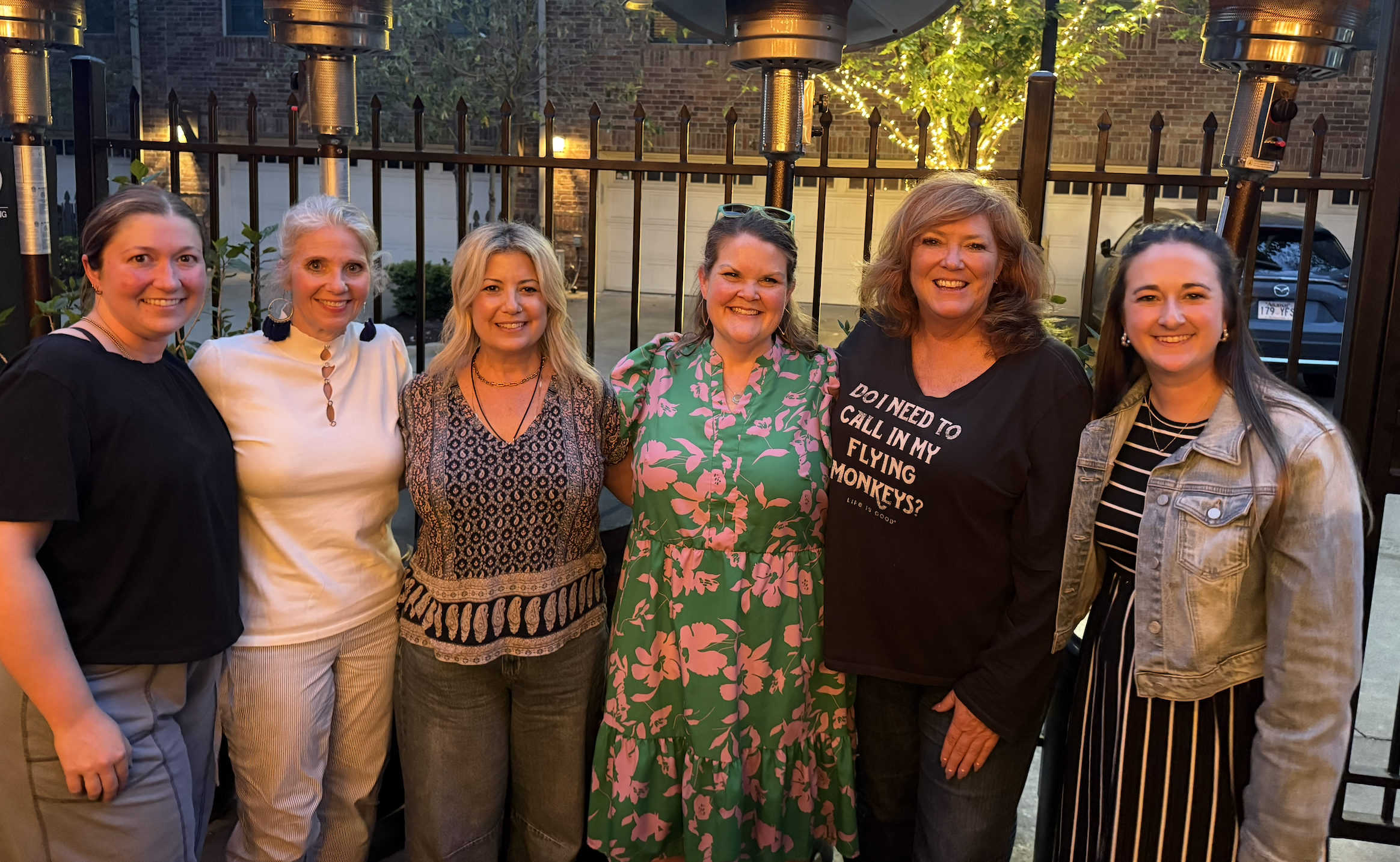
I’ve connected with sisters in places like Little Rock, Providence, and Columbia, and sometimes I’m even able to give backstage tours.
Why has maintaining those alumnae relationships been so meaningful to you?
ZTA truly is for a lifetime. Every chapter has its own personality, but there’s still that shared connection and commonality.
When I moved back to Massachusetts, getting involved with an alumnae chapter was such a great way to reconnect and meet people with different experiences and interests. You meet women who inspire and encourage you.
Whether it’s attending a dinner, participating in community service, or simply reconnecting after a performance, those relationships make touring feel less temporary and more grounded.
What advice would you give to collegiate women interested in creative careers that may not follow a traditional path?
Be open to opportunities, even if they aren’t exactly what you originally imagined. Relationships and reputation matter so much in creative industries, so work hard, stay professional, and treat people well.
Don’t be afraid of unconventional paths. Success in creative industries often comes from persistence, adaptability, and continuous learning from every experience. And most importantly—don’t burn bridges.